
Building skills for everyday life
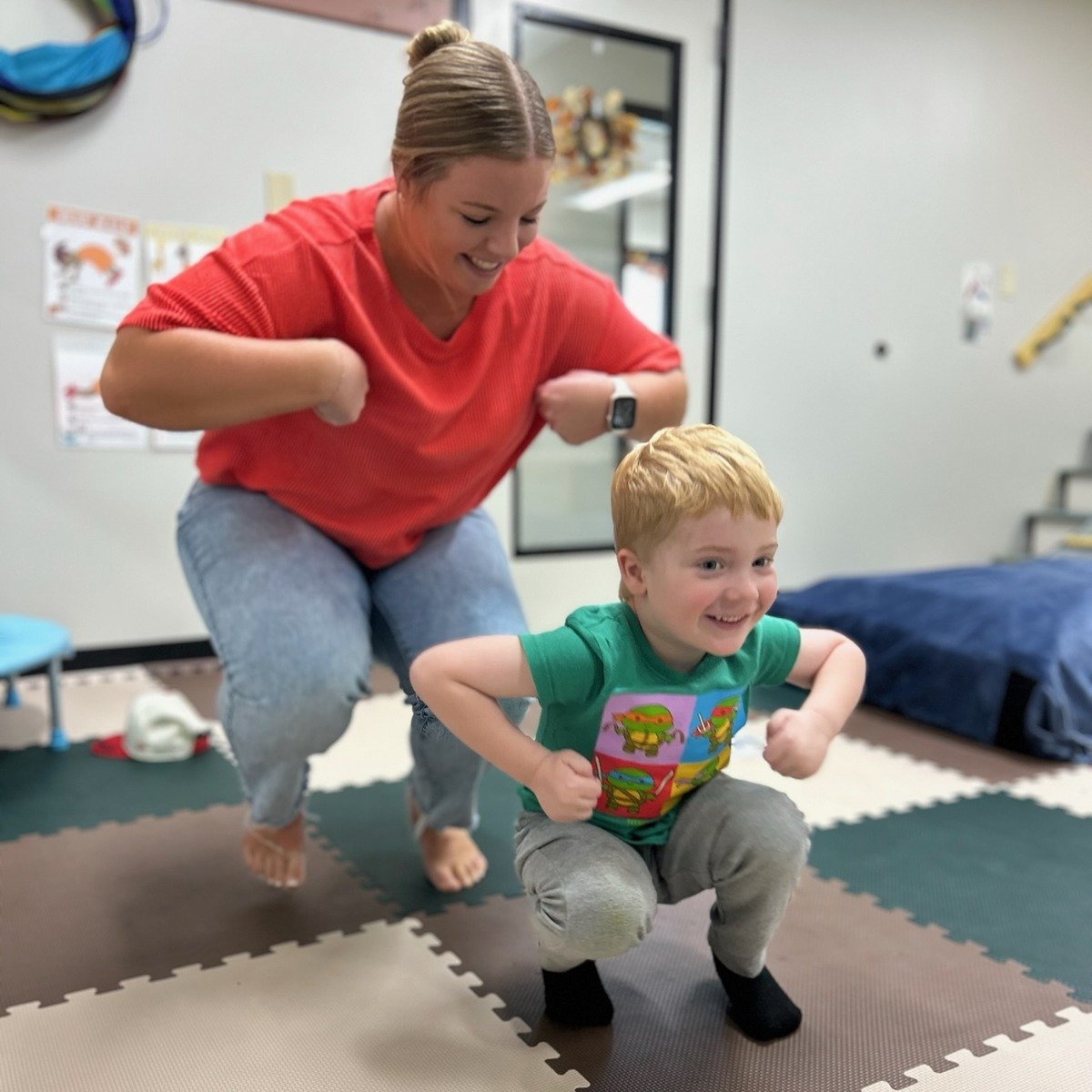
From learning to grasp a spoon as a toddler, to handling transitions as a child, to managing schedules as a teen, occupational therapy (OT) helps children develop practical skills to participate more comfortably and confidently in everyday life. Sessions are built around the activities your child already loves, in our custom sensory gyms at each location.
Licensed pediatric OTs · Sensory gyms in Lawrence & Topeka
Signs it might be worth a conversation
Every child develops differently, and there's no checklist that means your child needs therapy. But if some of these sound familiar, contact us today. It's a good place to start.
- Avoids or seeks out certain textures, sounds or movement
- Melts down over transitions, changes in routine, or getting dressed
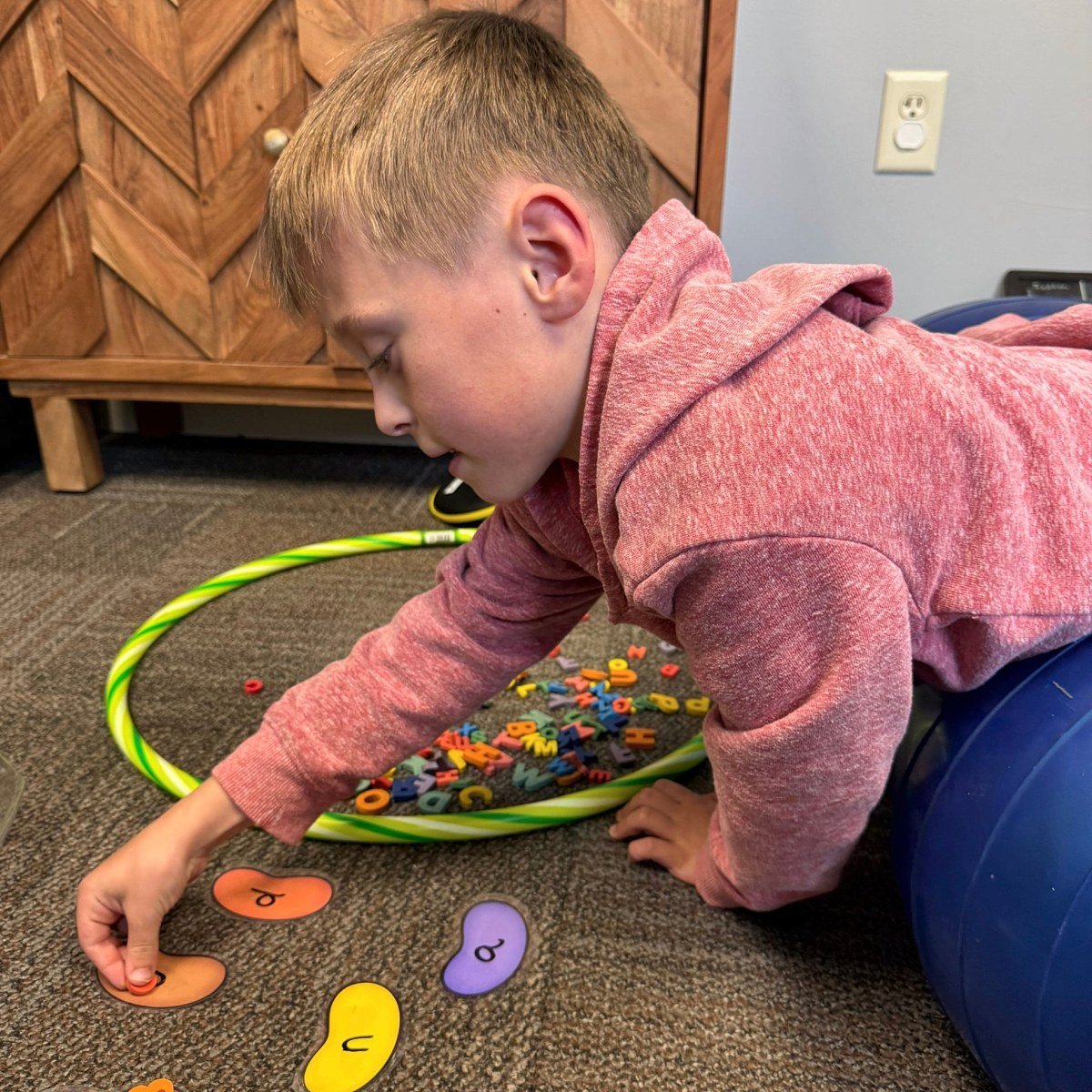
- Struggles with handwriting, scissors, or small manipulatives
- Writing is slow, tiring or hard to read, even when they know what they want to say
- Seems clumsy, frequently falls, or tires easily during play
- Has trouble sitting still, focusing, or calming their body
- Needs help with dressing, feeding or other daily routines beyond their age
These are general observations, not a diagnosis, and trusting your gut is never overreacting.
Is this just a phase?
Fine motor skills, self-care and sensory regulation follow their own timeline. Our milestone guide covers what most children can do at each age, and the patterns our therapists would want to hear about.
See Milestones by AgeThe six areas we look at
Most OT referrals come from one of these areas. Find the one that sounds most like your child, then see how it develops at each age.
Motor
- Meeting motor milestones
- Cutting, holding utensils, buttoning, tying shoes
- Coordination
- Learning new motor tasks
- Handwriting
Visual processing
- Copying from a board to paper
- Recognizing letters and shapes
- Copying shapes or letters
- Finding an object among other objects
- Letter-size alignment when printing
Movement, strength & balance
- Ball play skills
- Coordinating both sides of the body, like using two hands together
- Decreased balance, dislikes climbing or being off the ground
- Crossing midline
- Understanding right from left
- Avoiding movement during play
Learning & executive function
- Impulse control
- Maintaining focus at school
- Following directions and completing tasks
- Easily distracted
- Time management and planning for daily tasks
Sensory processing
- Unaware of surroundings
- Overly sensitive to their environment, picky about clothing, sensitive to touch or sound
- Constantly seeking movement, crashing, jumping
- Rigid with daily routines; difficulty with changes
- Calming self when upset
Self-care
- Completing dressing tasks
- Independently completing daily routines
OT isn't only for kids with a diagnosis.
Plenty of the children we see have no diagnosis at all. What they have is a gap between what they want to do and what their body lets them do, and a parent who noticed.
Occupational therapy helps children who are:
Learning to use their hands
Working toward handwriting, scissors, buttons and utensils.
Over- or under-responding to sensation
Bothered by tags, noise and textures, or seeking movement constantly.
Building attention and organization
Sitting through circle time, following directions, finishing a task.
Becoming independent
Dressing, feeding, hygiene and daily routines for their age.
Building strength and coordination
Confidence on the playground, in PE and at recess.
Using their eyes and hands together
Copying from a board, reading a page, finding things visually.
When handwriting is the hard part
Some children know exactly what they want to say but struggle to get it onto the page. Writing may be slow, tiring, hard to read, or something they avoid. Sometimes this is called dysgraphia.
Our occupational therapists look at the skills underneath handwriting:
- Hand strength and pencil control
- Posture and core stability
- Visual-motor skills
- Planning and organizing letters on the page
We build these skills through activities your child enjoys. Your child doesn't need a diagnosis to start, and OT works well alongside reading support, speech therapy, and school or homeschool learning.
Why is handwriting so hard?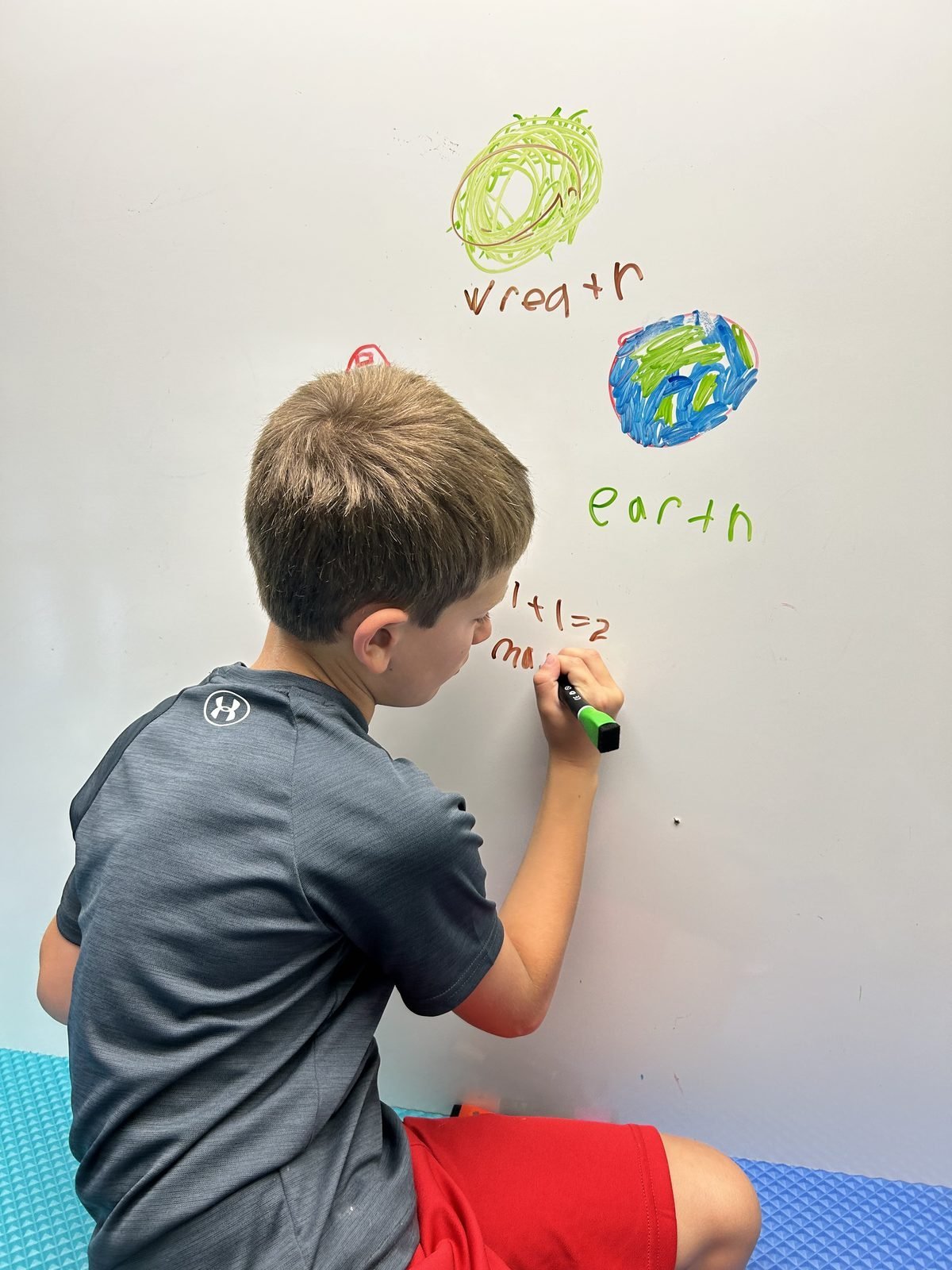
Tailored to your child and your family
At New Heights, we provide tailored occupational therapy to enhance children's functional abilities, promoting a better quality of life.
Our therapy is centered around the child and their family, recognizing caregivers as key members of our team.
Fine motor skills
Sharpening the hand and finger control behind everyday tasks: writing, fastening, cutting, and self-care.
Upper body & core strength
Building the postural strength that supports sitting, reaching, and sustained attention through the day.
Balance & coordination
Improving the control and stability your child needs for play, movement, and everyday activity.
Independence in self-care
Building independence in daily tasks like dressing, feeding, bathing, and grooming.
Executive function skills
Nurturing the planning, organization and self-management skills that underpin learning and daily routines.
Sensory processing
Helping children make sense of and respond to the sensory world around them.
You know your child better than anyone. That's why caregivers are treated as key members of the therapy team,not observers.
Two clinics. Two sensory gyms. Zero waiting on equipment.
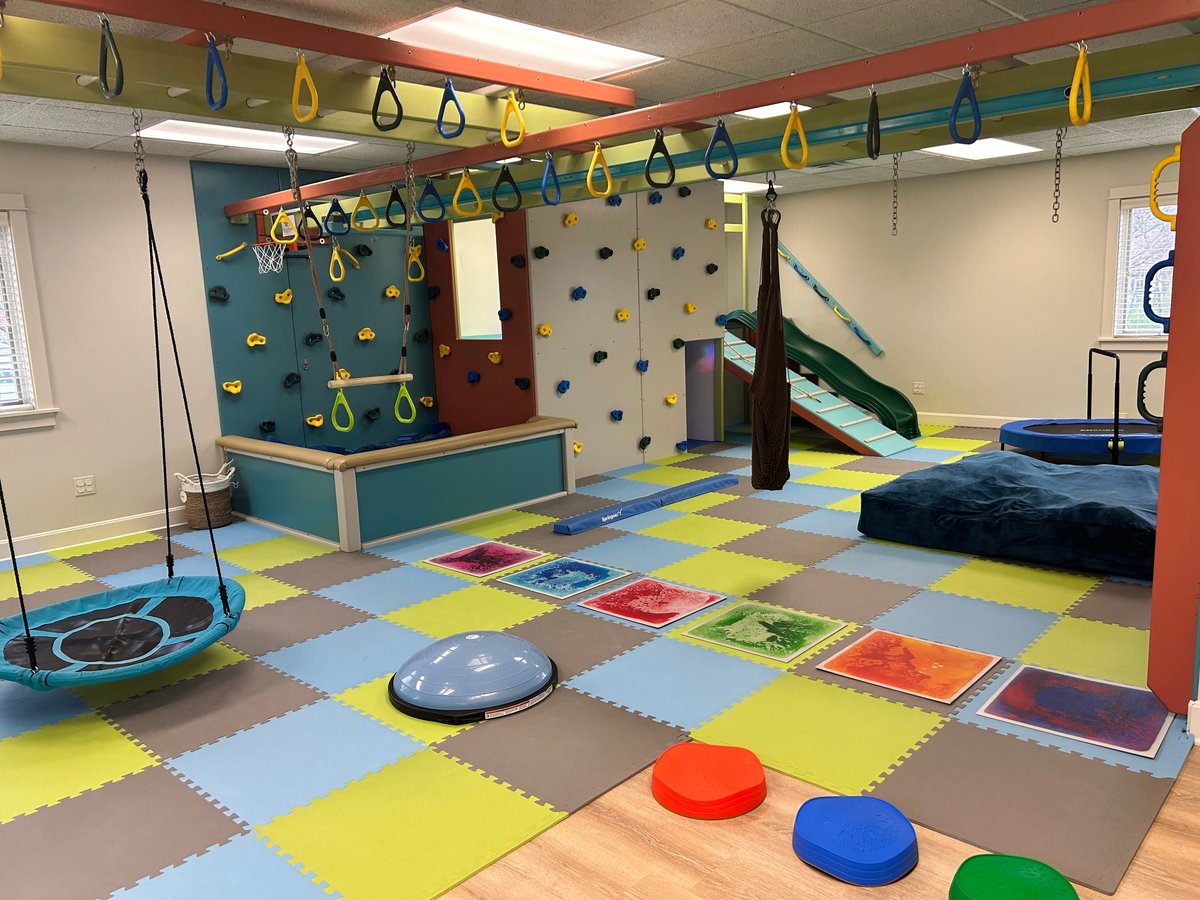
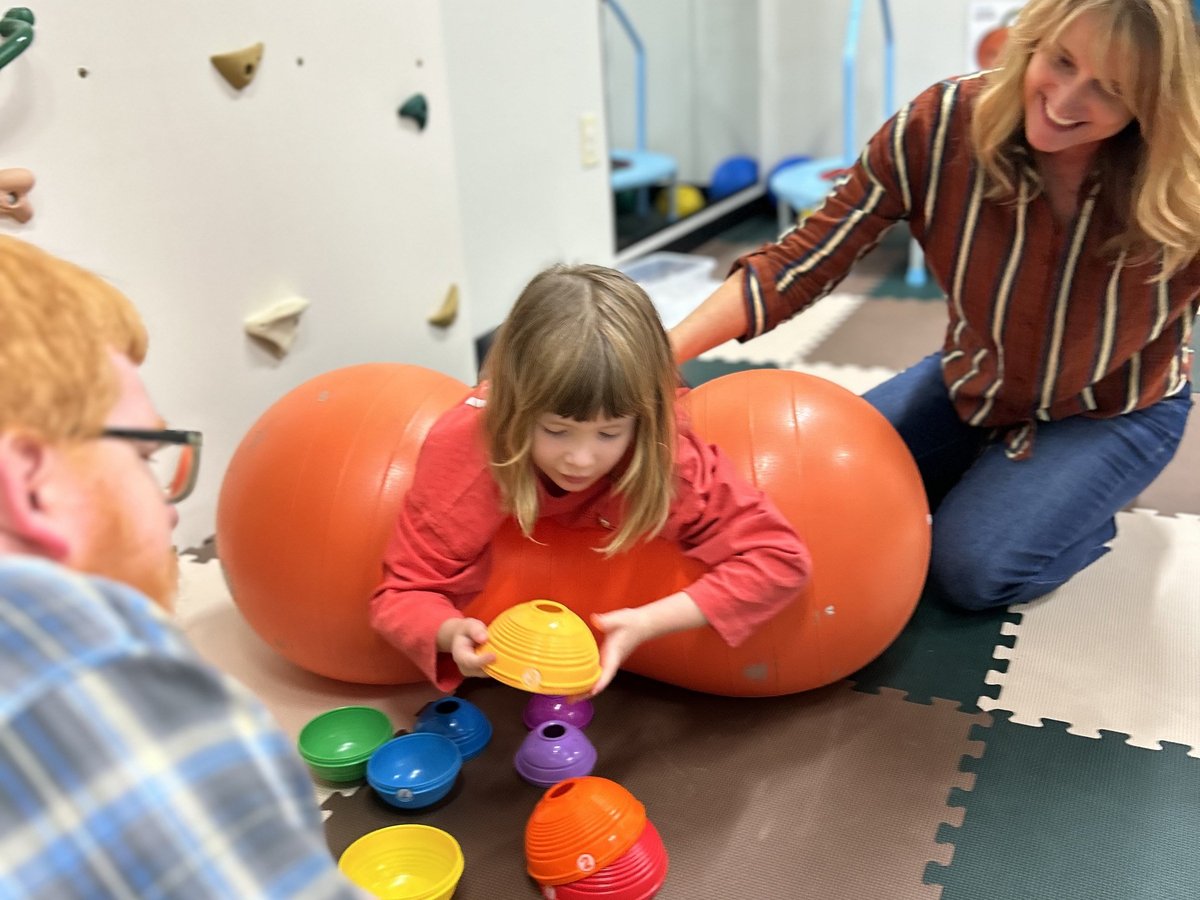
Both our Lawrence and Topeka clinics have their own custom-built sensory gym, with swings, climbing walls, foam pits, balance equipment and obstacle courses, all designed for pediatric therapy. Your child gets the whole space to move, regulate and build strength, without ever waiting in line.
Real kitchens, because real life happens in the kitchen
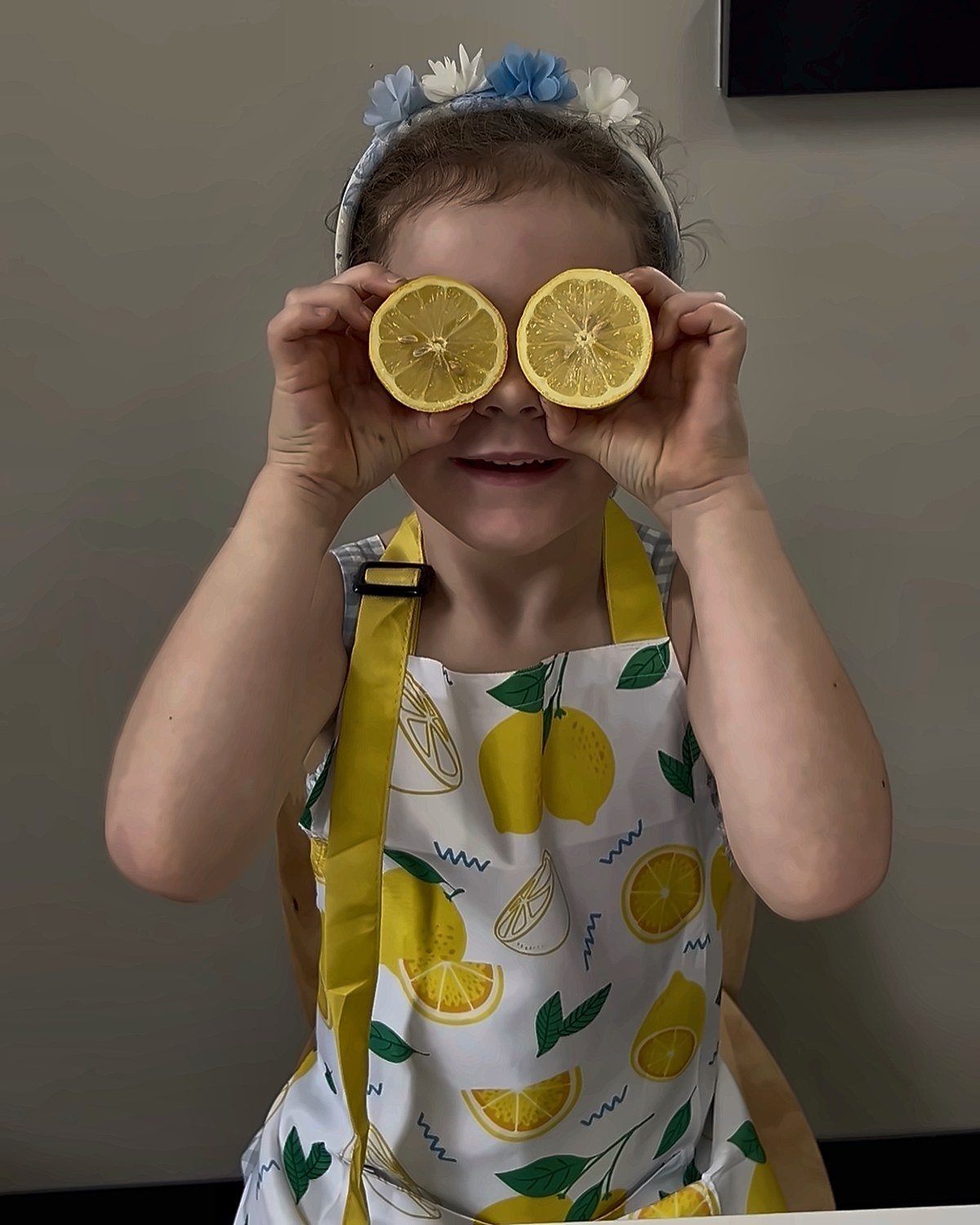
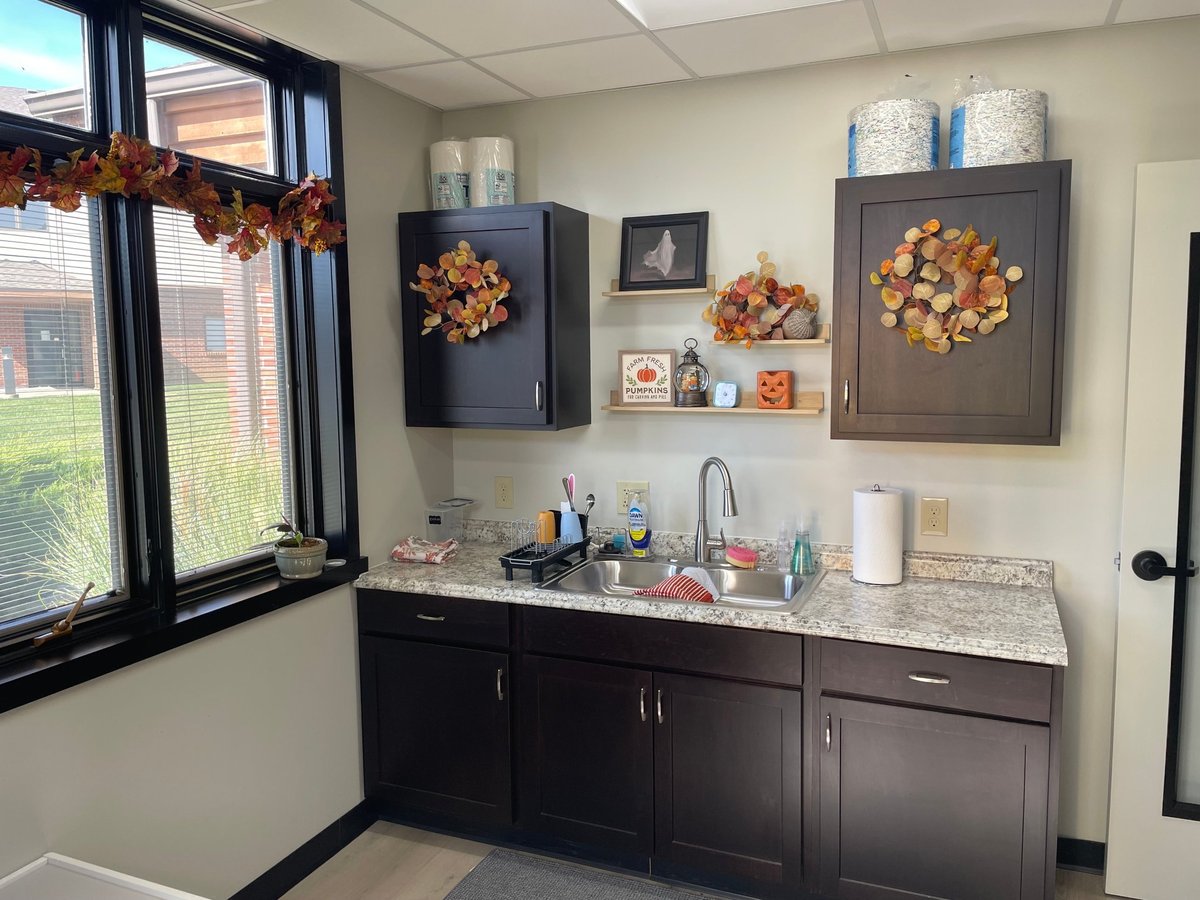
Both of our clinics have a full kitchen with a range, stove, microwave, refrigerator and sink. It is not set dressing. A kitchen is where some of the most important independence skills actually get built, and where feeding work becomes real food instead of a therapy exercise.
- Opening containers, pouring, and mixing: the hand and wrist control behind so many daily tasks
- Sequencing a recipe from start to finish, which is executive function in disguise
- Tolerating new textures and smells in a space that feels like home, not a clinic
- Standing at a counter while balancing and reaching: posture and balance in a natural setting
- Planning, shopping and preparing a simple meal as a path toward independence
Our occupational therapists and feeding therapists run these sessions together, so a child working on feeding and a child working on motor skills can both make progress in the same room.
Step by step, skill by skill.
Climbing walls, swings, tunnels, and tongs might look like playtime, but each one builds the strength, coordination, and calm your child needs for buttoning a coat, holding a pencil, or sitting through circle time. Every giggle is part of the plan.
Come see the sensory gym for yourself.
Reach out and you'll talk with our office manager about what you're seeing, what services fit, and how insurance and payment work, before anything is scheduled. No referral needed to talk it through.