
Where the tongue, lips and jaw learn their job
Most parents have never heard the term “orofacial myofunctional therapy.” It's actually pretty simple: we retrain how the tongue, lips and jaw rest and work together. That foundation affects speech, breathing, sleep, eating and dental development, and most kids enjoy the work.
For children ages 4 and up · No referral needed to say hello
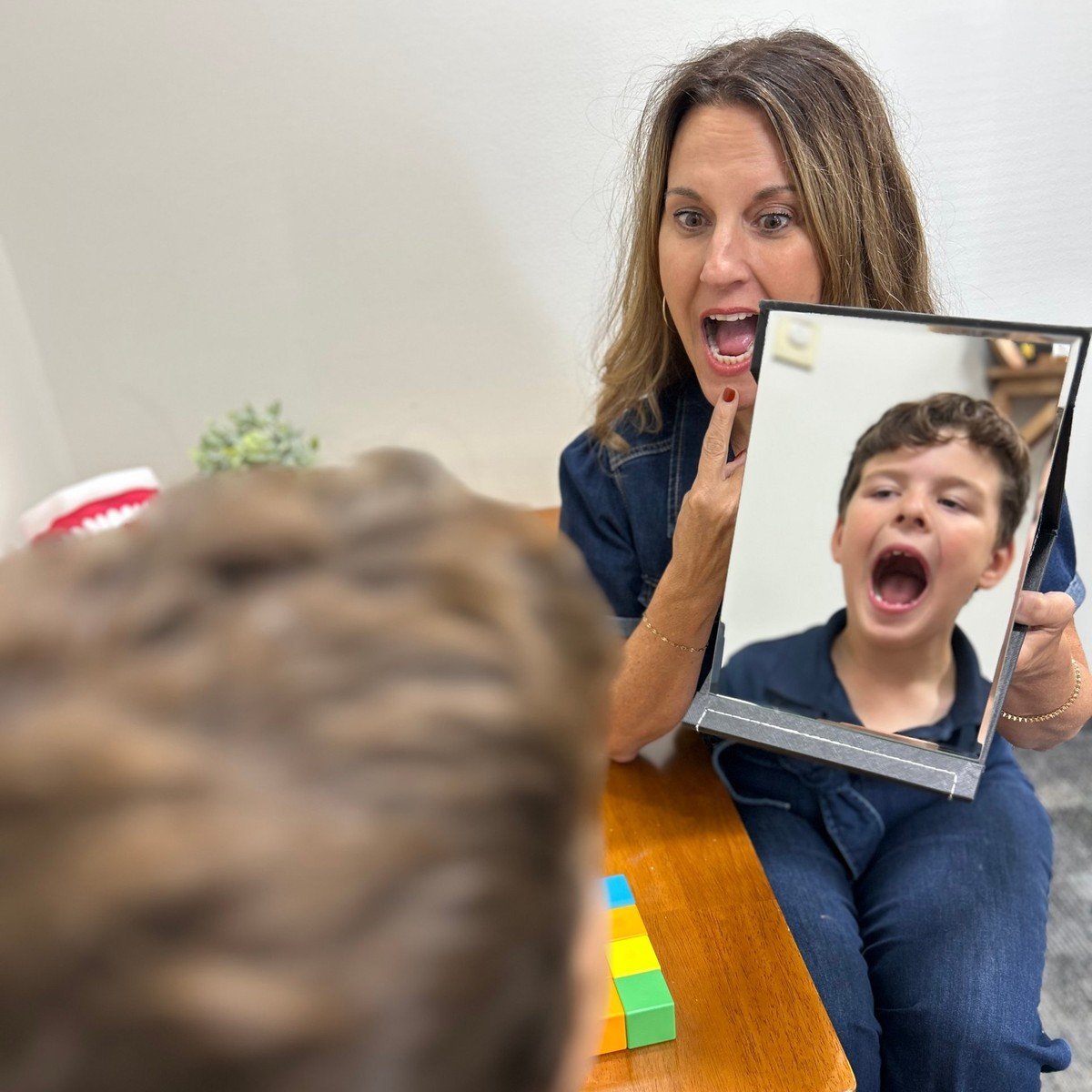
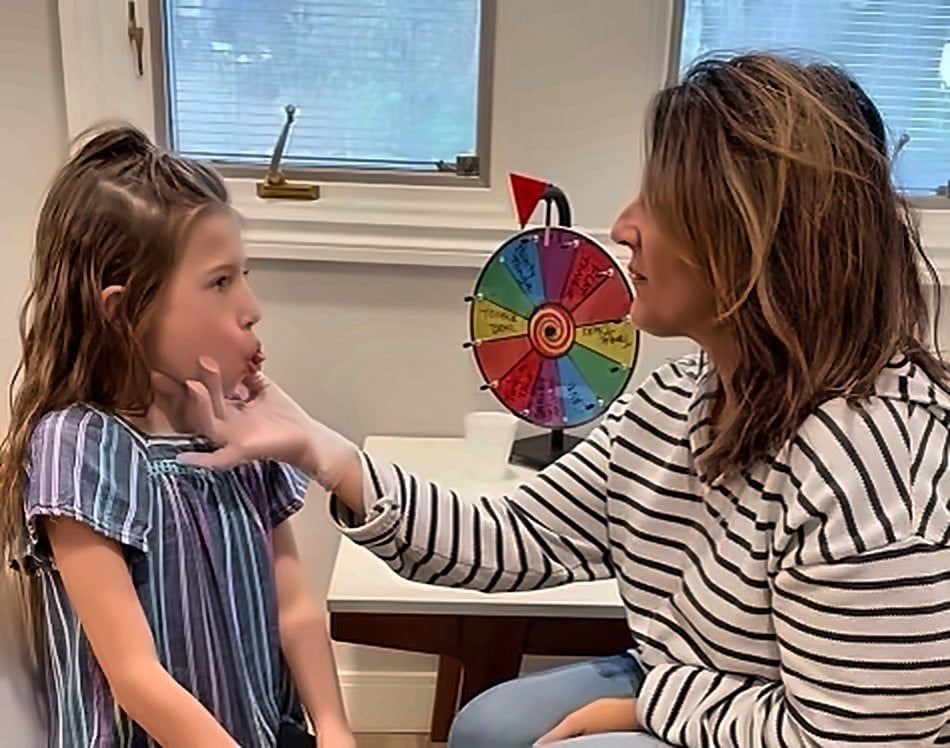
Signs it might be worth a conversation
Every child's mouth develops differently, and some habits resolve on their own. But if some of these feel familiar, contact us today. It's an easy first step.
- Breathes through the mouth at rest, during sleep or watching TV
- Snores, wakes often, or sleeps with the mouth open
- Tongue pushes forward against the teeth when swallowing
- Lips stay apart at rest, even when the nose is clear
- Thumb, finger or pacifier habits that continued past age four
- Trouble with “s,” “z,” “th,” or a lisp that hasn't resolved
- Chews with an open mouth, or is a slow, messy eater
- Your dentist or orthodontist has mentioned crowding or an open bite
These are general observations, not a diagnosis, and trusting your gut is never overreacting.
Mouth skills develop on a timeline too
Chewing, swallowing, breathing and tongue posture all follow their own developmental path. Our milestone guide covers what most children can do at each age, and when it's worth a closer look.
See Milestones by AgeDoes my child need this?
These are things you can notice at home, at the table, or while your child is asleep. If several of them sound familiar, an evaluation is worth considering.
Mouth breathing
Breathes through the mouth at rest, during sleep, or when watching TV.
Sleep & snoring
Snores, wakes often, sleeps with an open mouth, or seems unrested in the morning.
Speech sounds
Trouble with “s,” “z,” “th” or a lisp that hasn't resolved on its own.
Thumb or finger habits
Sucking habits that continue past age four and are affecting the teeth or jaw.
Chewing & eating
Chews with an open mouth, is a slow or messy eater, or avoids certain textures.
Dental concerns
Your dentist or orthodontist has mentioned crowding, an open bite, or a tongue thrust.
These are general signs, not a diagnosis. If you're unsure, take the first step, contact us today.
What “orofacial myofunctional” actually means
Every mouth has a resting posture, where the tongue sits, whether the lips are closed, and how you breathe when you're not thinking about it. When those habits are off, they can quietly affect a lot more than speech.
Healthy oral rest posture
- Lips gently closed at rest
- Tongue resting against the roof of the mouth
- Breathing through the nose
- Correct tongue placement when swallowing
- Chewing and biting with a comfortable, efficient pattern
When habits go the other way
- Mouth breathing, especially during sleep
- A tongue that sits low or thrusts forward when swallowing
- An open-mouth resting posture even when the nose is clear
- Thumb, finger or pacifier habits that linger past age four
- Speech sounds that are hard to pin down, like “s” and “th”
Left unaddressed, these patterns can contribute to dental crowding, orthodontic relapse, disrupted sleep, and trouble with speech and eating. The good news: they respond well to therapy, especially when we catch them early.
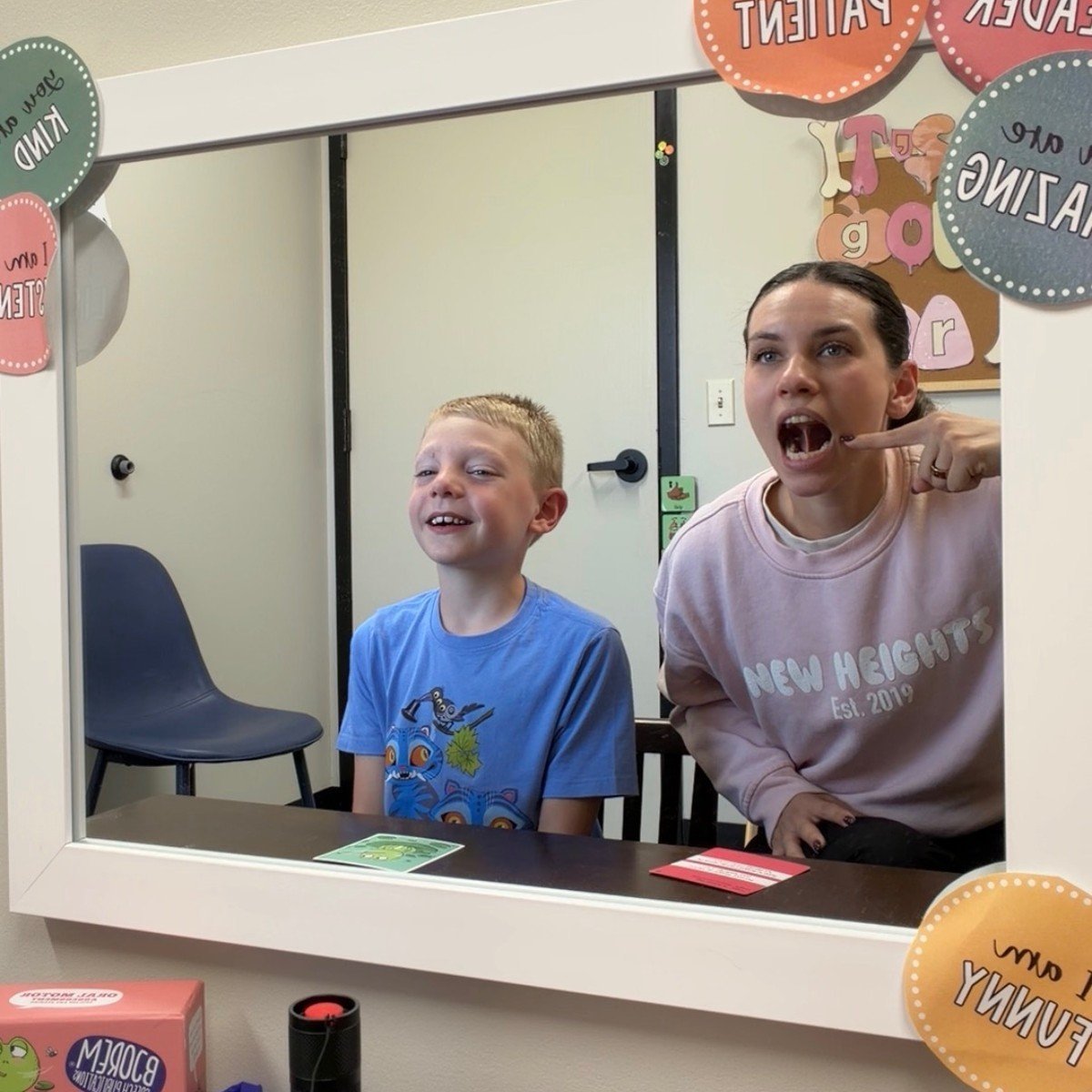
Short, focused sessions, and homework that matters
Myofunctional therapy is a bit different from other services. The exercises themselves are brief, but consistency at home is what actually changes the habits.
A thorough evaluation first
We look at resting posture, breathing, swallowing, and how the tongue and lips are working together.
Exercises that feel like games
Short, targeted activities your child can do at home: usually just a few minutes a day.
Home practice you can keep up with
We build the routine around your real schedule, and we coach you so you know exactly what to watch for.
Progress we check together
We track the habit changes and adjust as we go, coordinating with your dental team where it helps.
We partner with your dentist, and decide with you
Many of our myofunctional families come to us through a dentist or orthodontist. When that happens, our therapists and your dental team work from the same picture. But the recommendation always comes to you, and you and your therapist agree on the plan together.
We assess
Our therapists evaluate oral rest posture, breathing and swallowing to identify what's actually going on.
We coordinate
With your permission, we share findings and align with your dentist or orthodontist on the goals.
You decide
We bring the recommendation to you in plain language. You and your therapist agree on what comes next.
Pre- and post-frenectomy care
We work alongside your dental provider before and after a frenectomy, helping your child build the tongue and lip function that makes the procedure successful. Ask us about it during your consultation.
Not sure where to start? Start with a conversation.
Reach out and you'll talk with our office manager about what you're seeing, what services fit, and how insurance and payment work, before anything is scheduled. No referral needed to chat.