If your two-year-old is mostly pointing and pulling you by the hand instead of using words, you are not alone and you have not done anything wrong. Late talking is the single most common reason families first call us, and it is one of the areas where early therapy makes the clearest difference.
By age two, most children are using somewhere around 50 words and starting to put two words together, things like “more milk” or “daddy go”. By age three, unfamiliar adults should understand most of what your child says. Those are averages, not finish lines. Some children are simply on the later side of normal and catch up on their own. Others need a nudge, and the only way to know which is which is to look closely at how your child is communicating overall.
The question we ask is not just how many words, but whether your child is communicating with you in other ways. Do they look at you and then at something they want, so you both share the moment? Do they wave, point, shake their head? Do they follow simple directions, like “bring me your shoes”? Do they seem to understand far more than they can say? A child with few words but rich back-and-forth communication is in a different place than a child with few words and little shared attention, and those two situations call for different plans.
Here is the part parents find hardest to hear, so we will say it plainly: waiting is rarely free. Children who are still late talking at age two are more likely to struggle with reading and writing later on, because so much of early literacy grows out of spoken language. That does not mean every late talker will struggle in school. It means the cost of a look is low and the cost of two more years of waiting can be high.
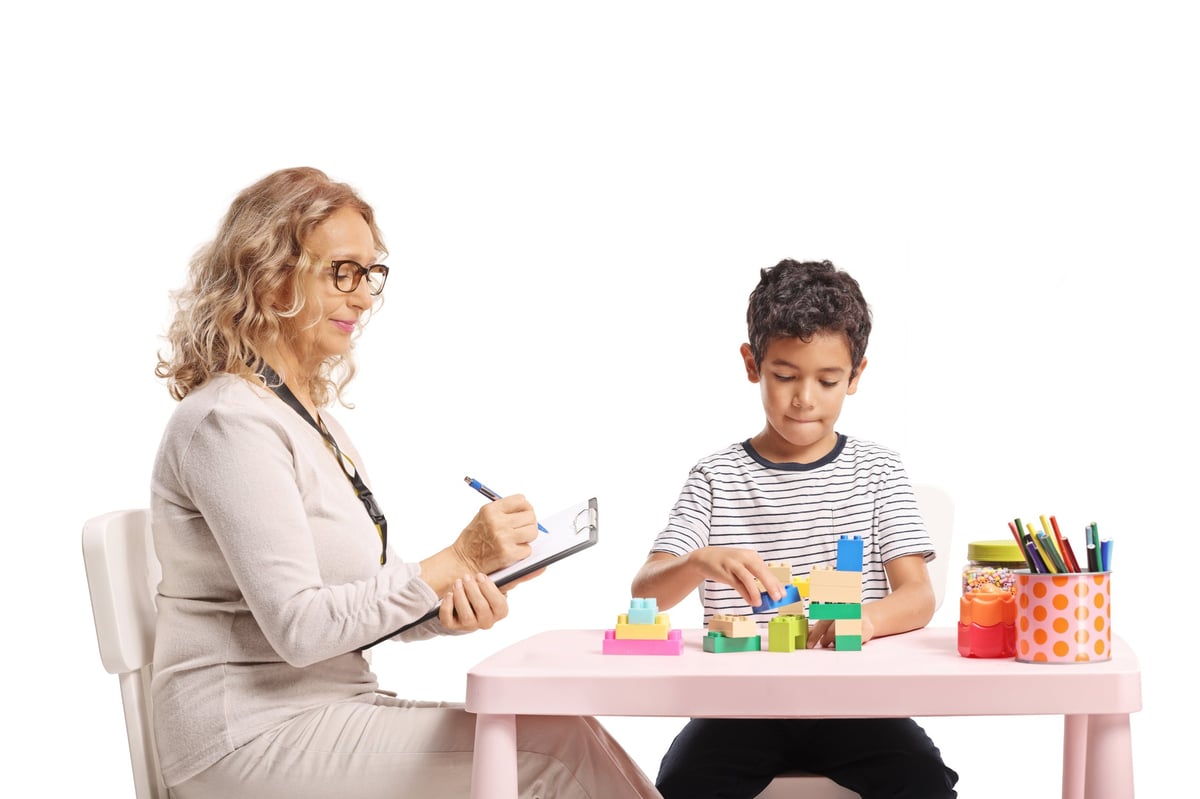
A speech-language evaluation is not a test your child can fail. It is a therapist spending time playing with your child and talking with you, then telling you honestly what they see and what they would do about it. Sometimes the answer is, “Your child is on their own timeline; here is what to watch for.” Sometimes it is, “Let’s start therapy now, while their brain is most ready to build these pathways.” Both are useful answers, and you get to decide what to do with them.
If you are unsure, get in touch and we will talk it through. No referral is needed to talk, nothing is booked, and you will talk to a real therapist who works with two-year-olds every day.
Try this at home
Try this today: narrate one ordinary routine out loud, slowly. While you change a diaper or unload the dishwasher, say what you are doing in short phrases, three or four words at a time. You are not teaching, you are giving your child words attached to something they can see. Do it for one routine a day and give it four weeks before you judge it.
Written by Kimberly Williams, M.S., CCC-SLP
Back to all articles