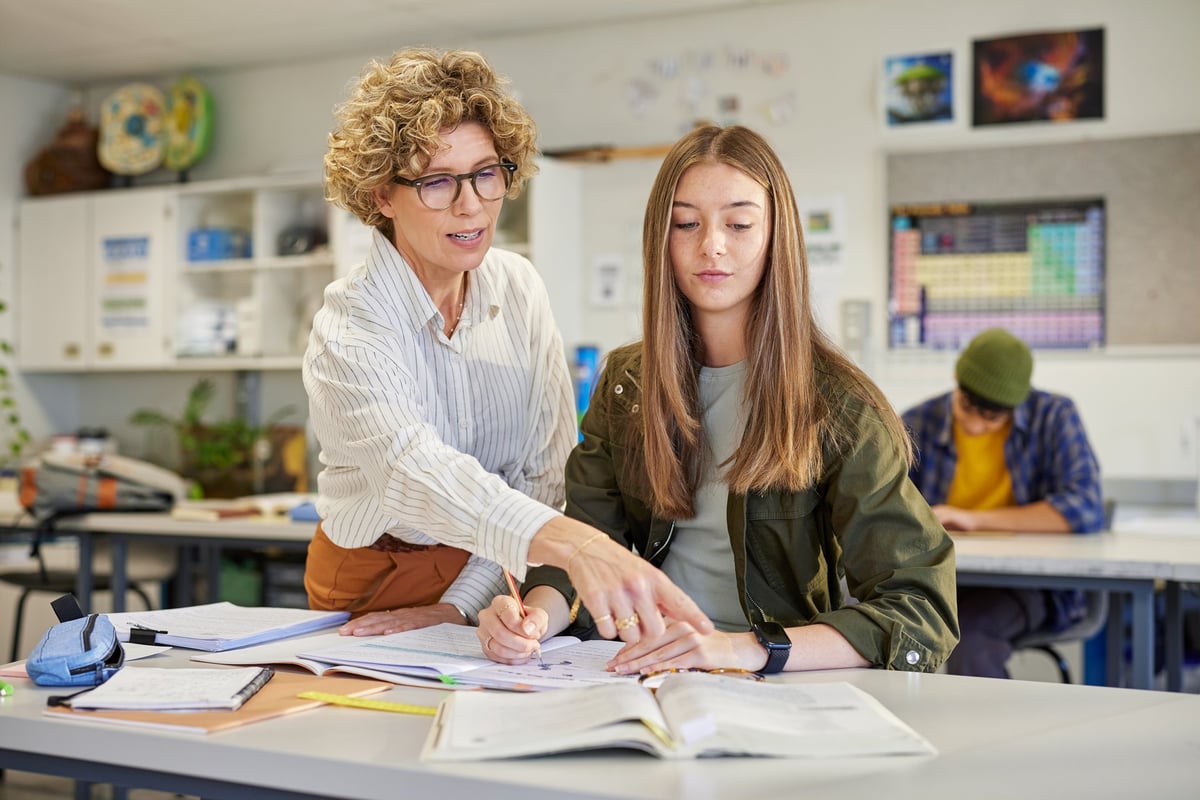
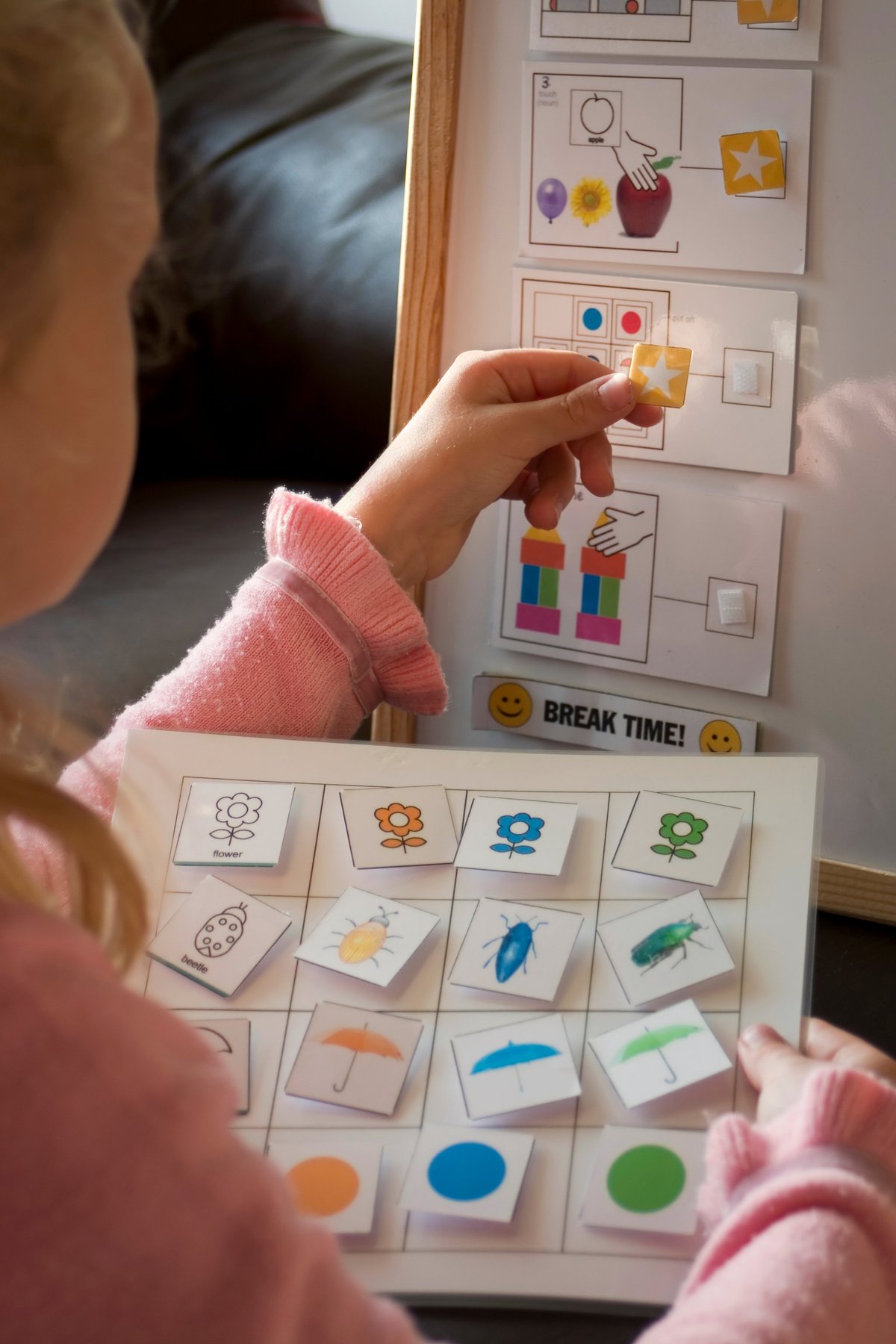
Autistic and neurodivergent students communicate, learn, regulate, and participate in many different ways. As teachers, you have an important opportunity to create classrooms where students feel understood, respected, and supported while still learning the skills they need to be successful.
Teaching the whole classroom
Supporting an autistic student is not only about teaching that student. It is also about helping the entire classroom understand that people communicate, learn, and regulate differently. Some students may need quiet time, movement breaks, dimmer lighting, visual supports, written directions, or extra time to process information.
It is important to validate the feelings and needs of both neurodivergent students and their neurotypical peers. This does not mean there are no boundaries, expectations, or consequences. It means we involve students in problem-solving, offer choices when appropriate, teach ownership, and help everyone learn how to participate together in a realistic and respectful way.
Eye contact is not the same as listening
Autistic students do not need to look directly into someone’s eyes to show they are listening. While initially this may seem rude or socially inappropriate, for many students eye contact can feel stressful or distracting. Looking away may actually help them listen, process information, and stay regulated.
This does not mean expectations disappear. Students still benefit from learning functional, respectful classroom behaviors, such as keeping their body oriented toward the speaker, staying within an appropriate distance, and showing attention in a way that works for them. The goal is to support communication, not force a neurotypical version of it.
Building on student strengths
Taking time to know each student can make a meaningful difference. Neurodivergent students are often creative, thoughtful, funny, observant, and full of ideas others may not think of. Once trust is built, they may share perspectives that enrich the classroom community.
Many neurodivergent students hear correction more often than praise. Being intentional about noticing and naming their strengths can help them feel seen and valued. Strength-based support does not ignore challenges; it uses strengths as a starting point for growth.
The goal is not to make students appear neurotypical. The goal is to help every student learn, participate, and thrive. Chances are if it is good for one student, it will be good for many more.
Partnering with families
Families of autistic and neurodivergent children often carry a heavy emotional and practical load. They may be celebrating the unique way their child sees the world while also trying to help others understand their child’s needs. Many families are also navigating therapies, school meetings, daily routines, social challenges, and moments when the world is not always patient or inclusive.
When parents advocate, it usually comes from deep love and concern for their child. Their emotions may show because their child is incredibly important to them. Approaching families with patience, curiosity, and respect helps build trust. When conversations feel hard, leaning in with kindness can strengthen the relationship between home and school.
Collaboration with outside professionals
Many neurodivergent students receive support from professionals such as speech-language pathologists (SLPs), occupational therapists (OTs), psychologists, counselors, behavioral specialists, and other providers. While coordinating with multiple team members can feel overwhelming, collaboration often makes supporting students easier in the long run.
Remember: you are the expert on the student in the classroom. Outside providers are experts in their areas of specialization. Families are experts on their child. When we combine those perspectives, we gain a more complete understanding of the student.
- Share strategies that have already been successful.
- Provide insight into communication, sensory needs, emotional regulation, and learning differences.
- Help problem-solve challenges in the classroom.
- Suggest practical accommodations and supports.
At the same time, your feedback helps providers understand what is working, what is not, and how skills are carrying over into real-world settings.
No two neurodivergent students are alike. What works for one student may not work for another. By working together, teachers, families, and outside professionals can create consistent supports that help students learn, participate, build relationships, and become more independent.
We all share the same goal: helping every student succeed. Sometimes the most effective support comes not from one professional working alone, but from a team working together.
What does “neurodivergent” mean?
Neurodiversity is the idea that differences in how people think, learn, communicate, pay attention, process information, and interact with the world are natural variations of the human brain. Neurodivergent individuals may learn and experience the world differently than their neurotypical peers.
It is important to remember that neurodivergence is not a measure of intelligence, motivation, character, or potential. Every student has unique strengths, challenges, interests, and support needs.
- Autism Spectrum Disorder (ASD)
- Attention-Deficit/Hyperactivity Disorder (ADHD)
- Dyslexia, Dysgraphia, and Dyscalculia (Specific Learning Disorders)
- Developmental Language Disorder (DLD) and other communication disorders
- Social Communication Disorder
- Intellectual Disability
- Developmental Coordination Disorder (Dyspraxia)
- Tourette Syndrome and other Tic Disorders
Nine areas of communication that may look different
1. Understanding language (receptive language). Students may have difficulty following multi-step directions, understanding abstract language, processing information quickly, or interpreting figurative language.
2. Expressing ideas (expressive language). Students may know exactly what they want to say but struggle to organize their thoughts, find words, explain ideas clearly, or provide enough information.
3. Social communication. Students may have difficulty initiating conversations, maintaining interactions, understanding social cues, reading body language, or interpreting others’ perspectives.
4. Speech clarity. Some students may have difficulty producing speech sounds accurately, which can make their speech harder to understand.
5. Fluency. Students may stutter, pause frequently, speak very quickly, or demonstrate an atypical rhythm or pace when speaking.
6. Voice and intonation. Volume, pitch, tone, or vocal expression may differ from what others expect in a particular setting or situation.
7. Attention and executive functioning. Differences in attention, working memory, organization, planning, flexible thinking, and self-regulation can affect communication, learning, and classroom participation. ADHD is one example of a condition that commonly impacts these skills.
8. Alternative ways of communicating. Some students communicate most effectively through gestures, visual supports, writing, sign language, or augmentative and alternative communication (AAC) systems. These are valid and meaningful forms of communication.
9. Listening and auditory processing. Some students may have difficulty filtering background noise, processing spoken information quickly, remembering verbal directions, or managing sensory input in busy environments.
Strength-based mindset: what teachers should remember
Neurodivergent students are often described by their challenges, but they bring many strengths to the classroom. Research and neurodiversity advocates emphasize the importance of recognizing these strengths alongside support needs. You may see:
- Creative and innovative thinking
- Strong attention to detail
- Deep knowledge in areas of interest
- Excellent pattern recognition
- Honesty and authenticity
- Strong problem-solving abilities
- Unique perspectives
- High levels of empathy and compassion
- Determination and persistence
What teachers can do
None of these require special equipment or extra planning time. Most take seconds, and most help the whole classroom.
- Provide clear and concise directions.
- Incorporate visual supports whenever possible.
- Allow multiple ways for students to demonstrate understanding.
- Focus on strengths, interests, and successes.
- Collaborate with families and related service providers.
- Create predictable routines while offering flexibility when needed.
- Remember that behavior is communication and often reflects an unmet need, skill gap, or environmental mismatch.
Try this at home
Teachers and school teams: if you have a student you are worried about, call us at (785) 831-3053. We are happy to be a resource for classroom strategies, and families do not need a referral to chat with us.
Written by Kimberly Williams, M.S., CCC-SLP
Back to all articles